

Occipital Neuralgia Treatment — Omaha, NE
Occipital Neuralgia Relief Without Injections or Medication
Persistent shooting pain from the base of your skull to the top of your head is often occipital neuralgia — a nerve condition we treat at the root cause with Chiropractic Biophysics.
What Is Occipital Neuralgia?
Occipital neuralgia is a distinct type of headache disorder caused by irritation or injury to the occipital nerves — the greater, lesser, and third occipital nerves that run from the upper cervical spine (C1–C3) through the scalp to the top of the head.
Unlike migraines or tension headaches, occipital neuralgia produces sharp, shooting, electric-shock-like pain that typically starts at the base of the skull and radiates upward. The pain can be one-sided or bilateral and is often accompanied by scalp tenderness and light sensitivity.
At Omaha Headache Clinic, we identify the cervical spine dysfunction compressing or irritating these nerves and correct it — without injections, nerve blocks, or long-term medication.
The Occipital Nerves: Where Pain Originates
Three nerves — one root cause
Greater Occipital Nerve
C2 nerve root
The primary nerve responsible for sensation over the back and top of the scalp. Compression at C1–C2 or in the suboccipital muscles is the most common source of occipital neuralgia pain.
Lesser Occipital Nerve
C2–C3 nerve roots
Supplies the upper lateral scalp and behind the ear. Irritation produces pain along the side of the head and behind the ear, often mistaken for ear or jaw problems.
Third Occipital Nerve
C3 nerve root
The smallest of the three, it supplies the lower back of the head. Dysfunction at the C2–C3 facet joint is a common irritant — especially after whiplash or prolonged forward head posture.
Symptoms of Occipital Neuralgia
Occipital neuralgia has a distinctive symptom pattern that sets it apart from other headache types:
- Sharp, shooting, or electric-shock-like pain starting at the base of the skull
- Pain radiating from the neck up through the scalp to behind the eyes
- Scalp tenderness — even light touch or brushing hair causes pain
- Pain on one or both sides of the head
- Aching or throbbing between episodes of sharp pain
- Light sensitivity (photophobia) during episodes
- Pain behind the eyes or in the forehead
- Neck stiffness or tenderness at the base of the skull
Does this sound familiar?
If you experience shooting pain from the base of your skull, scalp tenderness, or electric-shock sensations in your head, you may have occipital neuralgia. A comprehensive cervical evaluation can confirm the diagnosis.
Call (402) 330-2811Free consultation — no obligation
What Causes Occipital Neuralgia?
The nerve irritation always has a structural source
Upper Cervical Misalignment
Subluxations at C1 or C2 place direct mechanical pressure on the occipital nerve roots, triggering chronic irritation and pain.
Suboccipital Muscle Tension
Tight, hypertonic muscles at the base of the skull can entrap the greater occipital nerve as it passes through the suboccipital triangle.
Forward Head Posture
Every inch of forward head posture adds 10 lbs of effective weight on the cervical spine, chronically compressing the upper cervical joints and nerve roots.
Whiplash or Neck Trauma
Sudden acceleration-deceleration injuries can damage the C2–C3 facet joints and surrounding soft tissue, leading to persistent occipital nerve irritation.
Cervical Disc Degeneration
Degenerative changes at the upper cervical discs narrow the foramina through which occipital nerve roots exit, causing compression and pain.
Osteoarthritis of C1–C3
Arthritic changes in the upper cervical facet joints produce bony spurs and inflammation that directly irritate the occipital nerves.
Our 5-Step CBP Treatment Approach
Chiropractic Biophysics targets the structural cause — not just the pain
- 01
Comprehensive Cervical Evaluation
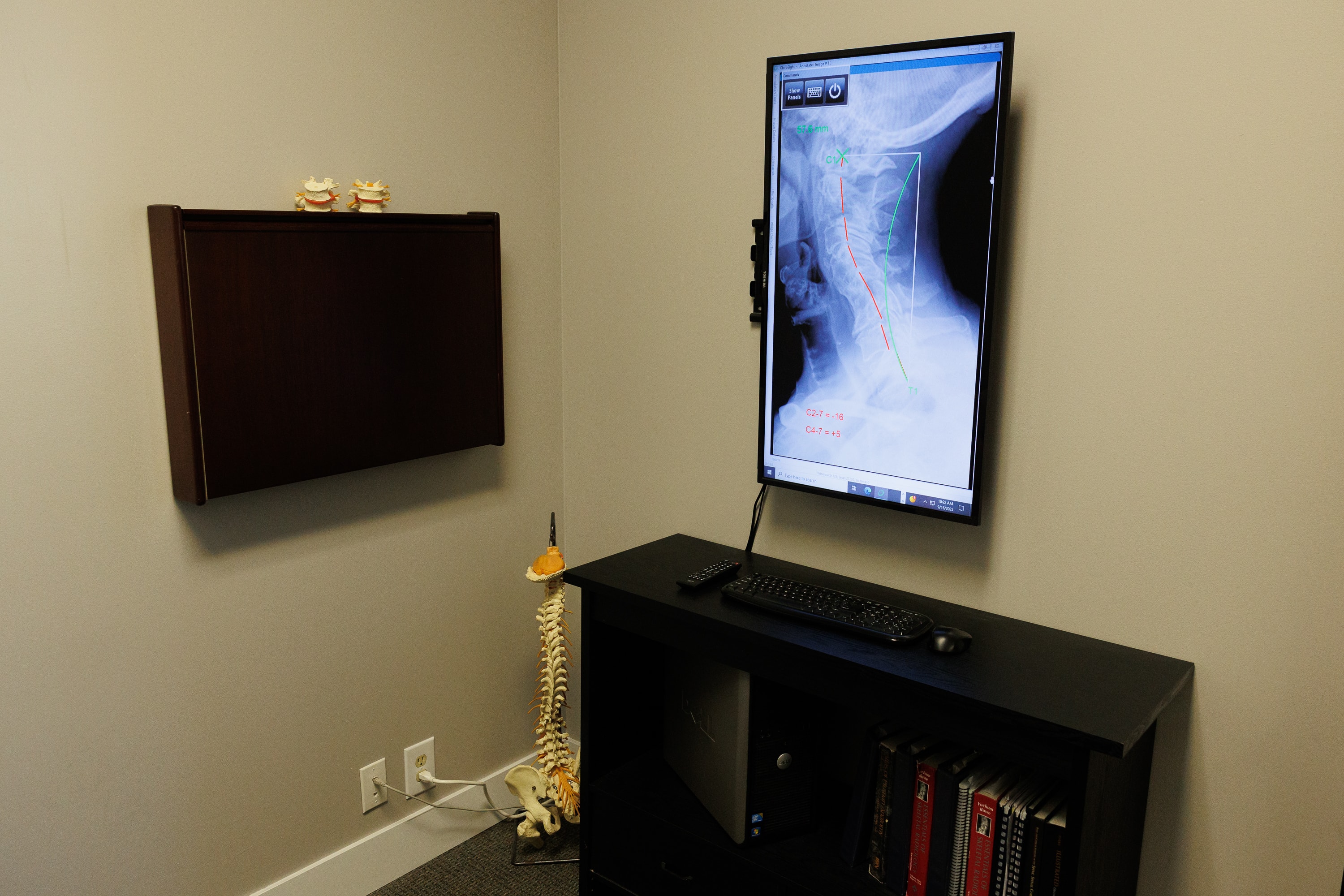
We begin with a detailed history, neurological exam, and digital X-rays to precisely identify which cervical segments are misaligned and which nerves are affected.
- 02
Precision Upper Cervical Adjustments
Targeted, gentle adjustments at C1–C3 relieve direct mechanical pressure on the occipital nerve roots — often producing immediate reduction in pain intensity.
- 03
Suboccipital Soft Tissue Release
Manual therapy and instrument-assisted techniques release the tight suboccipital muscles that entrap the greater occipital nerve, restoring normal nerve glide.
- 04
CBP Spinal Remodeling
Mirror-image adjustments and traction protocols correct the underlying cervical curve abnormality — the root structural cause of chronic nerve compression.
- 05
Postural Rehabilitation
Targeted exercises and postural correction training address forward head posture and muscle imbalances to prevent recurrence and maintain long-term relief.

Occipital Neuralgia vs. Other Headache Types
Knowing the difference guides the right treatment
| Feature | Occipital Neuralgia | Migraine | Tension Headache |
|---|---|---|---|
| Pain quality | Sharp, shooting, electric | Throbbing, pulsating | Dull, pressure, squeezing |
| Pain location | Base of skull → scalp | One or both sides of head | Band around head |
| Scalp tenderness | Yes — hallmark symptom | Sometimes | Rarely |
| Nausea/vomiting | Uncommon | Common | Uncommon |
| Neck involvement | Always — nerve origin | Sometimes | Often |
| Root cause | Cervical nerve compression | Neurological/vascular | Muscle tension/posture |
Many patients have overlapping conditions. A comprehensive evaluation determines the primary driver of your headaches.
Related conditions we treat
Occipital neuralgia often coexists with cervicogenic headache
Because both conditions originate in the upper cervical spine, many patients have elements of both. Our evaluation distinguishes the primary driver and treats all contributing factors simultaneously.
Frequently Asked Questions
Ready to Find Relief from Occipital Neuralgia?
Schedule a comprehensive cervical evaluation and find out if CBP is right for you — no obligation, no pressure.